

If you find this article interesting, click the like button for me! I would greatly appreciate it :)
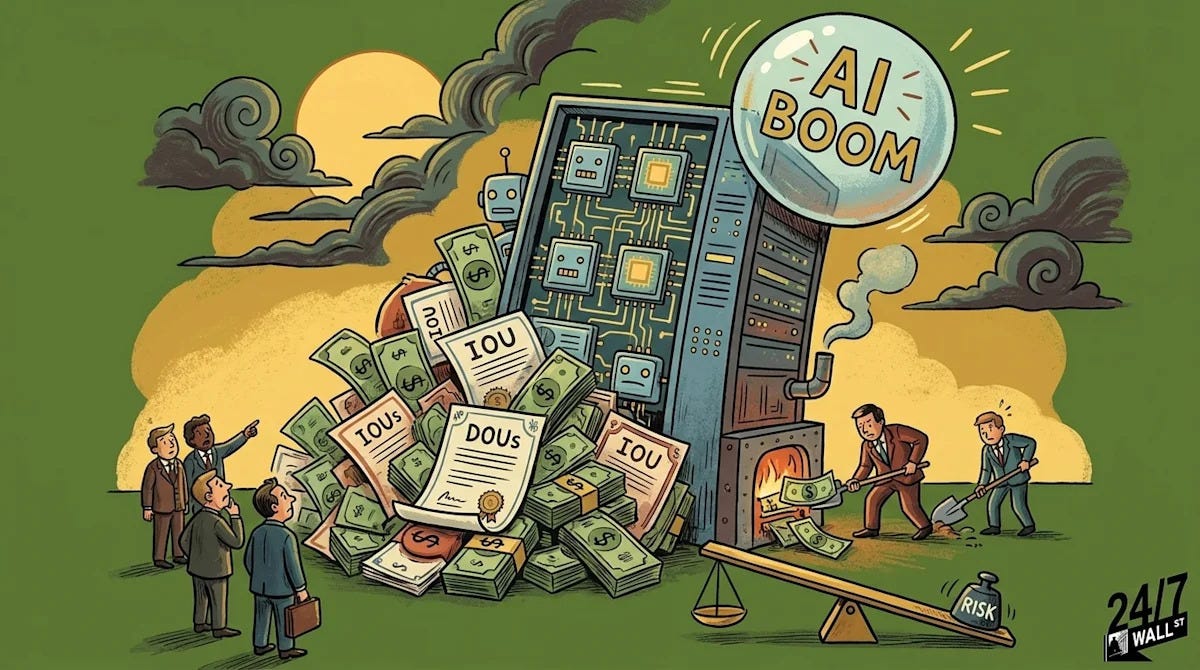
Interest rates are rising in the economy. Opinions about why are all over the place, and many of them are wrong. Some are worried about the debt and fiscal unsustainability, others about inflation and the war, and others about the massive AI buildout. Every one of these explanations is wrong or misplaced.
Inflation
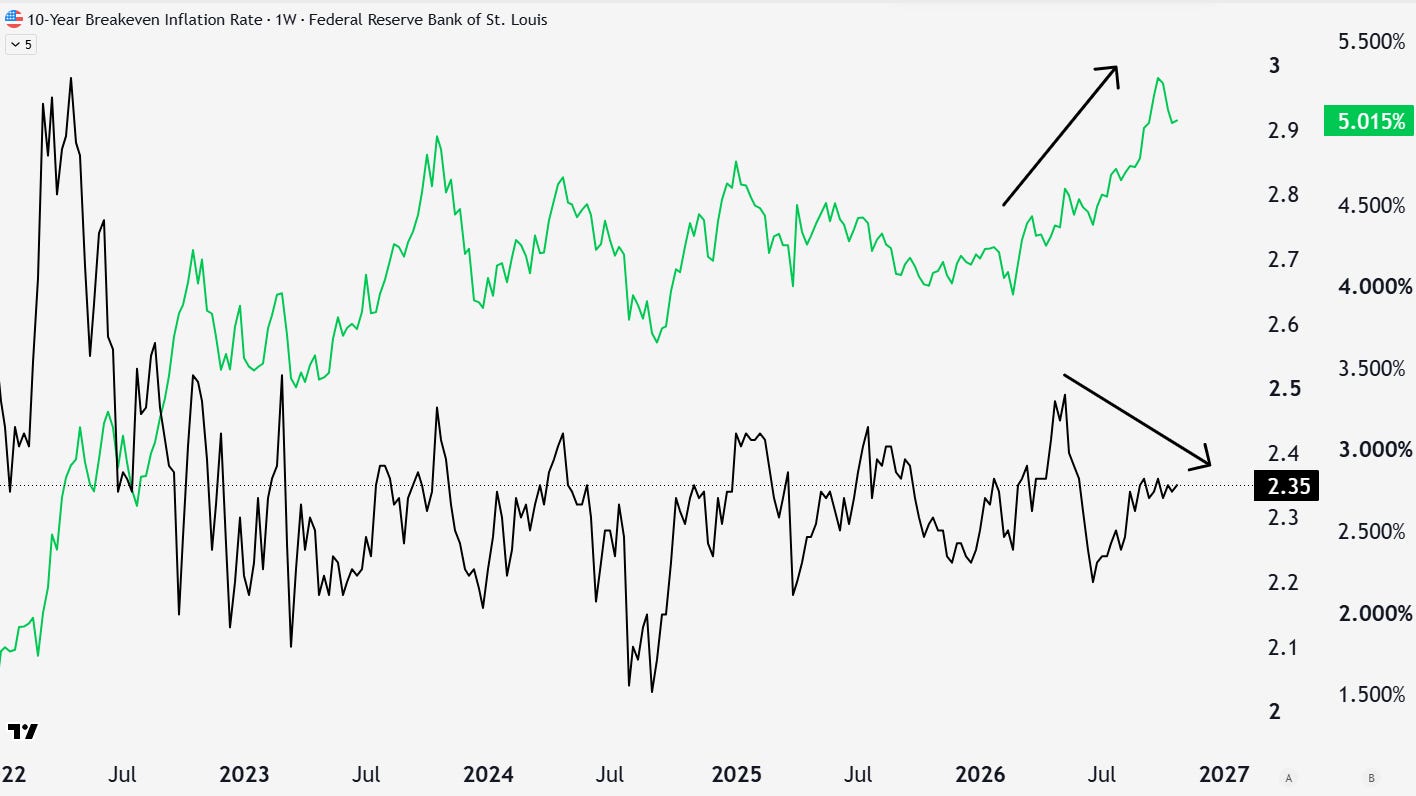
Many believe that the rise in interest rates is due to inflation expectations increasing as a result of the Iran war and the rise in oil prices. This is plausible, especially since 10-year interest rates track nominal economic growth (real GDP growth + inflation). However, we can use breakeven inflation rates as a market estimate of inflation over the next 10 years. Breakevens are the difference between the nominal bond and the inflation-protected bond. This is better than CPI and estimating inflation, as market participants are “voting” with their capital in the markets. It is forward-looking while CPI is backward-looking.
Breakeven rates show that investors have not changed their inflation expectations. As interest rates have gone from 4% to 5%, breakeven inflation rates actually went down. You can tell yourself that inflation has caused the rise, but that’s not what the market believes.
Debt
There is still tremendous demand for US Treasuries. If foreign countries were worried about US debt, they would cut back purchases, lowering demand, which lowers prices and raises interest rates. The issue is that the purchases of US debt have been steady. There is not much alternative, as other countries have less trustworthy bond markets and weaker economies.
Also, at the moment, the US has a relatively neutral monetary policy relative to the post-2008 period, meaning they are not dumping supply of Treasuries or being any more fiscally unsustainable than normal. Trust me, I am not a fan of the debt situation and have written extensively about it, but it is not why interest rates are shooting up recently.
AI Buildout
I’ve heard many say that the tremendous demand for AI capex and investment is the reason why interest rates have gone higher. This argument makes no sense and has no grounding in economic principles. Interest rates follow the principles of supply and demand like most assets. This is why the Federal Reserve tries to manipulate the markets to manage volatility and interest rates of bonds.
First, the relationship between bond prices and bond yields is inverse (rising bond yields mean lower bond prices). If there were an increase in demand for AI capex and debt, the price would go up, causing the bond yield to go down, not up. What really is going on here is a tremendous increase in the supply of debt for AI capex.
Since much of this debt is taken from the top companies like Google, Meta, Amazon, etc., the investment-grade status means that it is not too different from US Treasury bonds of similar duration. When there is an increase in bond supply, the price goes down, and bond yields go higher.
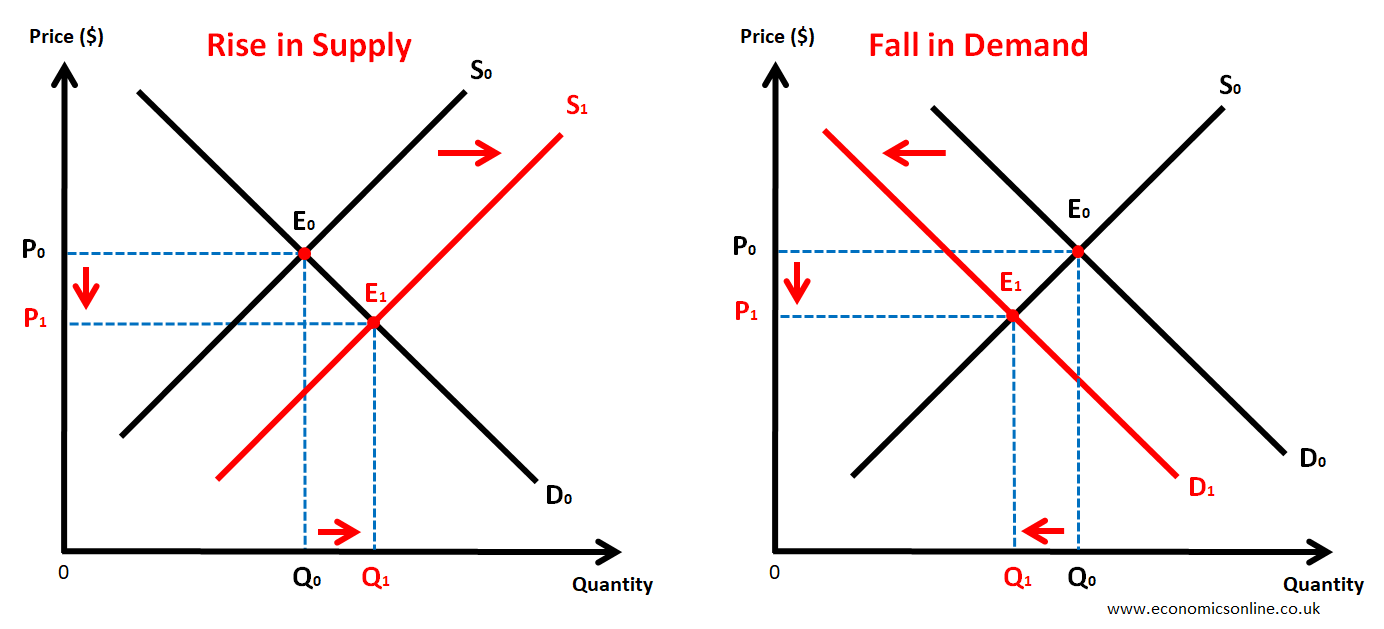
The demand is from bond SELLERS, the ones trying to raise money in the real economy to build data centers and fund operations. There is the same (or less) demand for this debt, and the interest rate mechanically goes up, and that is exactly what we are seeing.
Debt/Collateral
The market is in equilibrium, and higher interest rates are a sign that there is less appetite or ability to absorb the large funding requirements. This shows the strength of the real economy and is a natural balancing mechanism of the bond market. Companies will have a hard time rolling over debt or raising capital to fund spending obligations in the future, causing market stress. This is seen with CDS rising and junk credit spreads rising.
This is important because the modern economy is a debt refinancing economy. Instead of saving and using cash to fund investments, individuals, corporations, and governments finance operations with debt (even the hyperscalers now). When something else comes up, they refinance to fund obligations or take on new loans for new endeavors. The business cycle has essentially turned into whether or not debt can be refinanced, or there are massive dislocations (i.e., the 2008 financial crisis) when there is a lack of liquidity or ability to refinance.
A Note On AI
This is the major issue that divides investors today, and they don’t realize they are arguing from different foundations. Assuming there are no challenges to funding, refinancing, and capital raising for the AI buildout, then everything will be fine. There is growing demand, AI is improving, and companies are showing profitability. The critics suggest that the profitability is not on a solid foundation and the future requirements will be difficult to achieve.
The reality is that no one knows if/when a company will face financing challenges and cause a cascade in the intertwined AI complex. The truth is that rising interest rates and credit spreads suggest that the increased supply of AI debt is not being absorbed as it was. Higher interest costs represent an environment of less willing investors, on top of more expensive obligations for these companies to pay. If they secure funding now, the company can still fail if it can’t make payments in the future.
Interest rates are the price of money. Right now, money is more expensive than it was. This is closely associated with the economy + inflation (nominal GDP). It also has to do with the supply and demand of bonds (debt). A higher interest rate means that the price (value) of the debt is going down. Investors have to be enticed with higher returns to take on the debt.
The million-dollar question is whether the rise in nominal GDP and interest rates is a healthy secular rise brought on by the technological boom. Or is it a temporary rise due to the increased debt supply, soon to cause issues with financing and debt refinancing? I believe it is the latter, with ample evidence of economic weakness outside the AI capex frenzy.
In this world, we are closer to a short-term top in rates than a continued explosion higher. This is because people will move along the risk curve back into safe US Treasury bonds when there is worry about economic weakness and market volatility. I discuss this in further detail in the Model Portfolio. Join to see the Model Portfolio, be on the right side of market risks, and learn how to make higher risk-adjusted returns.
-Grayson
Like to see these asymmetric opportunities synthesized into a real model portfolio that beats the S&P 500 and avoids major downside risks?
Socials
Twitter/X - @graysonhoteling
Email - thegrayarea55@gmail.com
Archive - The Gray Area
Notes - The Gray Area
Promotions
Sign up for TradingView
For educational and entertainment purposes only. The Gray Area should not be taken as financial advice.