

If you find this article interesting, click the like button for me! I would greatly appreciate it :)
El Niño
For climate scientists, an El Niño occurs when the sea surface temperature anomaly off the Pacific coast of South America reaches +1.0C. The terms strong and super are used when this anomaly reaches 1.5C and 2.0C.
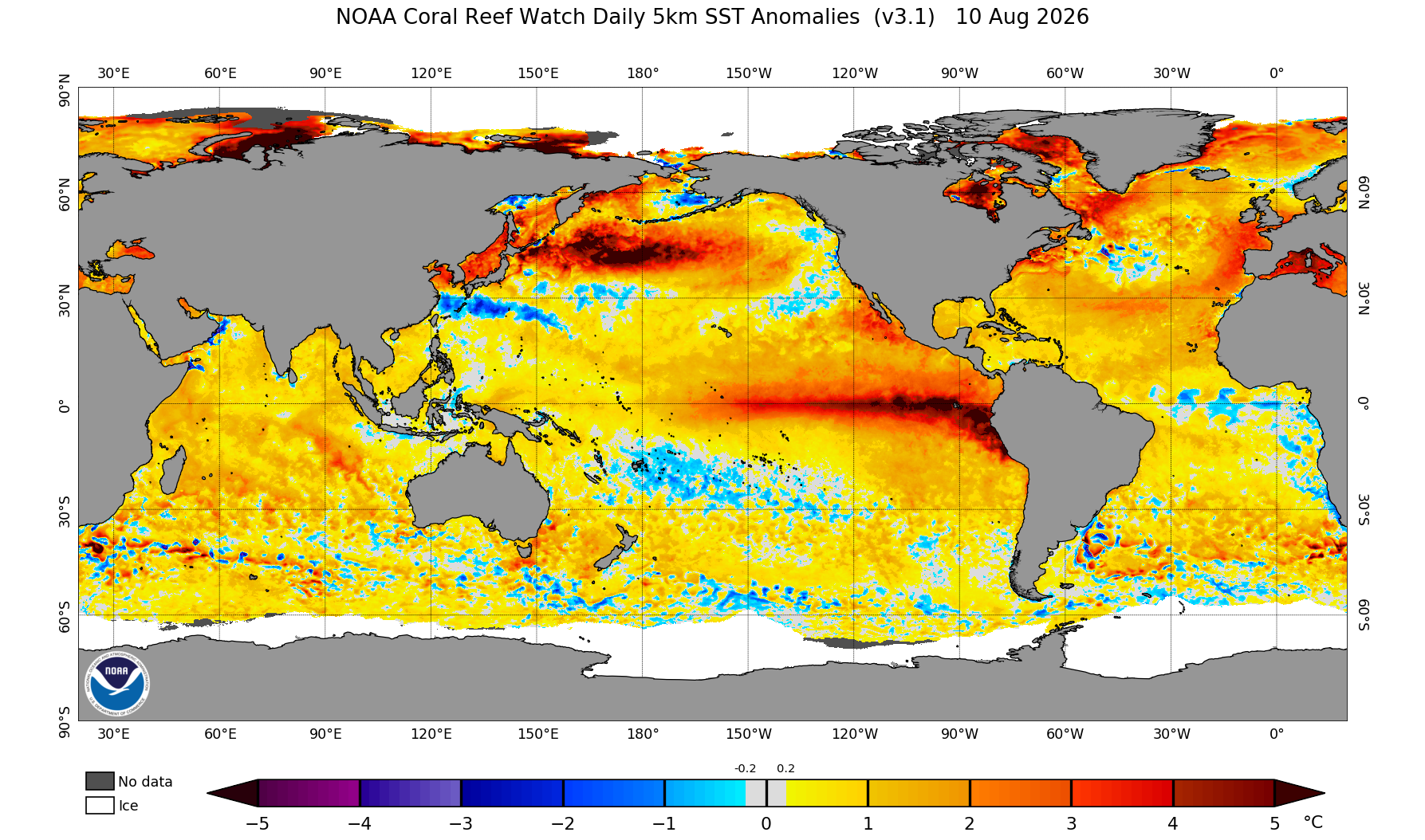
The top two El Niño events in recorded history are 1877 and 2015, reaching ~2.75C. Currently, the latest August estimates predict a maximum anomaly of ~3.5-4.0C by December. We are essentially already at a super El Niño months earlier than normal. The median forecast is for the strongest on record by late 2026.
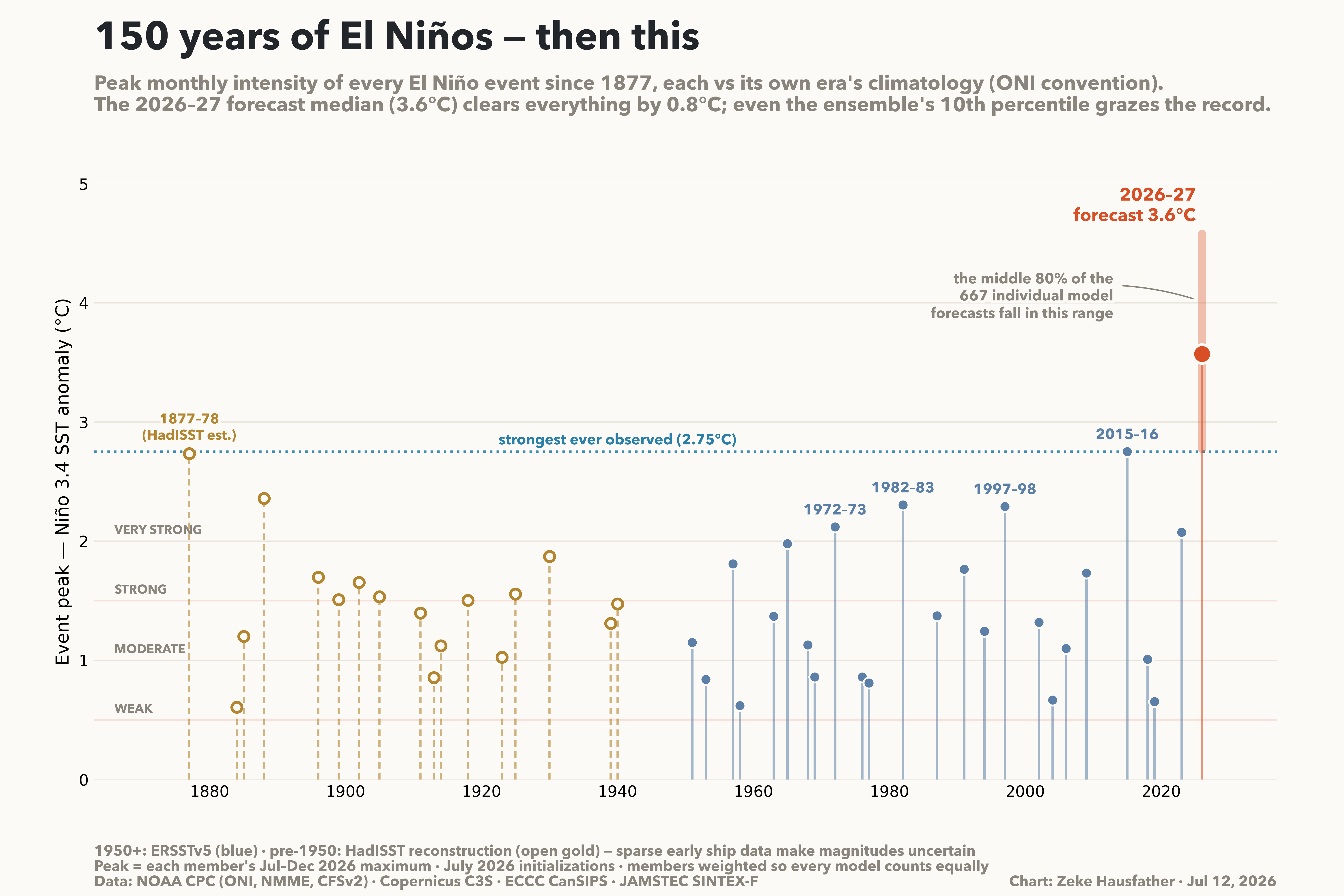
In 2015, El Niño brought droughts and floods to certain regions, crop shortages, and food insecurity. Overall, the impact was minimal to moderate. 1877 saw the opposite impact, with an estimated 50 million deaths worldwide. Now it is extremely important to determine whether this event will be insignificant or cause another global calamity.
Typical impacts for strong El Niños include temperature, precipitation, and storms. It tends to be drier in India, Indonesia, northeast Brazil, Australia, and South Africa. It tends to be wetter in Brazil and western South America. The US typically sees a wetter southwest and southeast with a drier northeast and northern Rockies into Canada.
Global mean temperatures should react in 2027 to the large reservoir of ocean heat transferred to the atmosphere. This burst in mean global temperature is a predictable phenomenon based on the solar cycle impact on ENSO climate patterns, not climate change. There is some debate about whether the ENSO events are exacerbated by climate change, but that is not a topic I will cover.
Finally, cyclones and hurricanes react to the ENSO environment. El Niños typically bring weaker Atlantic hurricane seasons and stronger Pacific typhoon seasons. That does not negate the possibility for one of those less frequent storms to be extreme and cause damage.
These are investable themes I’ve discussed in the past in my Not So Bright and Fields of Neglect series. To learn how these may fit into a portfolio, consider upgrading your subscription to access the model portfolio.
1877
The 1877 super El Niño caused abnormal weather patterns which led to a progression of drought, crop failures, and famine. Horrific geopolitical and colonization issues contributed to and worsened the negative impacts. 50 million famine-related deaths resulted.
Historical documentation indicates famine-related mortality between 12.2 and 29.3 million in India, between 19.5 and 30 million in China, and 2 million in Brazil (Davis 2001), amounting to 3% of the global population at the time. - Singh et al. 2018
Singh et al. also proposed mechanisms of the 1877 event, which suggest that while the Pacific anomalies are the dominant factor, the correct timing of specific anomalies in the Indian Ocean and Atlantic Ocean determine whether we get an extreme 1877 event or a mild 1998/2015 type event.
The paper suggests that risks escalate if the Indian Ocean anomaly peaks in the fall after the Indian monsoon season and the Atlantic anomaly peaks in the spring during Brazil planting season instead of summer.
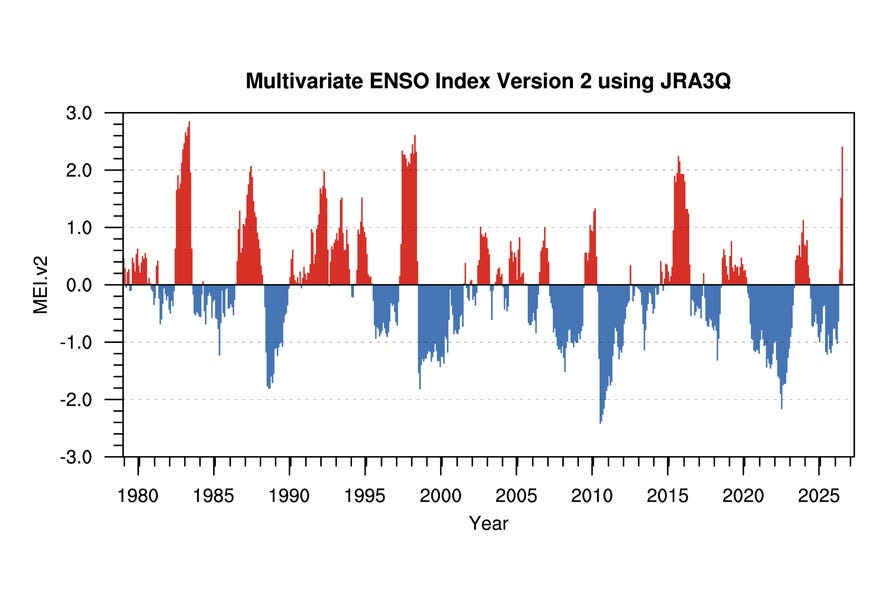
Other factors like pressure and wind determine whether the temperature anomalies are actually impacting the weather patterns. The multivariable index below shows that we are in fact experiencing strong El Niño already. Another factor that made 1877 worse was the 7 years of La Niña preceding it. Today, we have a somewhat similar dynamic, with most of the last 10 years spent in La Niña.
Today
While it may get more clicks, I am not going to sit here and tell you that global famine with millions of deaths is on its way, nor would I ever like to see that happen. Although we would be unwise not to heed the warnings of history. 2026-2027 is shaping up to be the most extreme El Niño event in recorded history. Whether that leads to global food shortages or mild agricultural stress is multi-faceted.
In short, we are first watching the development of drought in India/Indonesia and an Indian Ocean sea surface temperature anomaly peaking later in the fall/winter. We are then watching the rise of the Atlantic sea surface temperature anomaly to peak during Brazil’s wet season in spring of 2027 instead of later in the summer.
Other than climate, the human element is not to be understated. While food insecurity is typically an issue in a super El Niño event, policy errors and geopolitical issues can turn them into deadly famines. Forced exports from India by Britain and dwindling reserves from conflicts in China turned moderate issues into catastrophes on the scale of WWII or the influenza outbreak back in 1877.
Today, transportation capabilities and agricultural yields are orders of magnitude better, which should help us avoid another global calamity. This El Niño occurred amidst a Fourth Turning by my definition and obviously was an event that made this era exceptionally worse, but did not cause it. Just like today, El Niño won’t cause the Fourth Turning, but if geopolitical impacts are not resolved, agricultural and food issues could escalate worse than expected.
We are unfortunately seeing tensions in the Middle East as well as in Ukraine continue longer than originally predicted. If these continue to disrupt energy, fertilizer, food, and other commodity supplies, things could be worse than they need to be. Things are ‘generally good’ right now. Past fourth turnings were very Tumultuous Times, which means that things could get worse today if the cyclical generational theory holds as I expect.
Agricultural commodities and energy are two sectors that could see outsized returns. Not only do these sectors benefit from El Niño-related stress, but they have seen historically low investor attention. Commodities are low percentages of the major stock indexes and have poor returns comparatively, which suggests mean reversion would be severe. Finally, governments are printing money hand over fist, and it will only get worse with deteriorating economic conditions. Real assets provide true diversification against the debasement of your money.
-Grayson
Like to see these asymmetric opportunities synthesized into a real model portfolio that beats the S&P 500 and avoids major downside risks?
Socials
Twitter/X - @graysonhoteling
Email - thegrayarea55@gmail.com
Archive - The Gray Area
Notes - The Gray Area
Promotions
Sign up for TradingView
For educational and entertainment purposes only. The Gray Area should not be taken as financial advice.
Here in SW New Mexico we have had a very humid atmosphere for 6 weeks now, no doubt enhanced by the El Nino water temps. Other than that we are having a pretty normal monsoon season (unfortunately we are hoping for much more to alleviate the persistent drought). The Pacific hurricane season hasn't been anything to write home about as yet either. In 1998 the East Pacific was on fire including Hurricane Linda, at that time the strongest ever recorded and we got brushed by Hurricane Nora in San Clemente, CA (Nora's center made landfall in Yuma). Normally dry dusty Baja was green for almost two years straight from winter rains and tropical summer moisture. That was a wet, wild, and warm winter on the SoCal coast in 1998. Not sure what to make of this current El Nino.