

If you find this article interesting, click the like button for me! I would greatly appreciate it :)
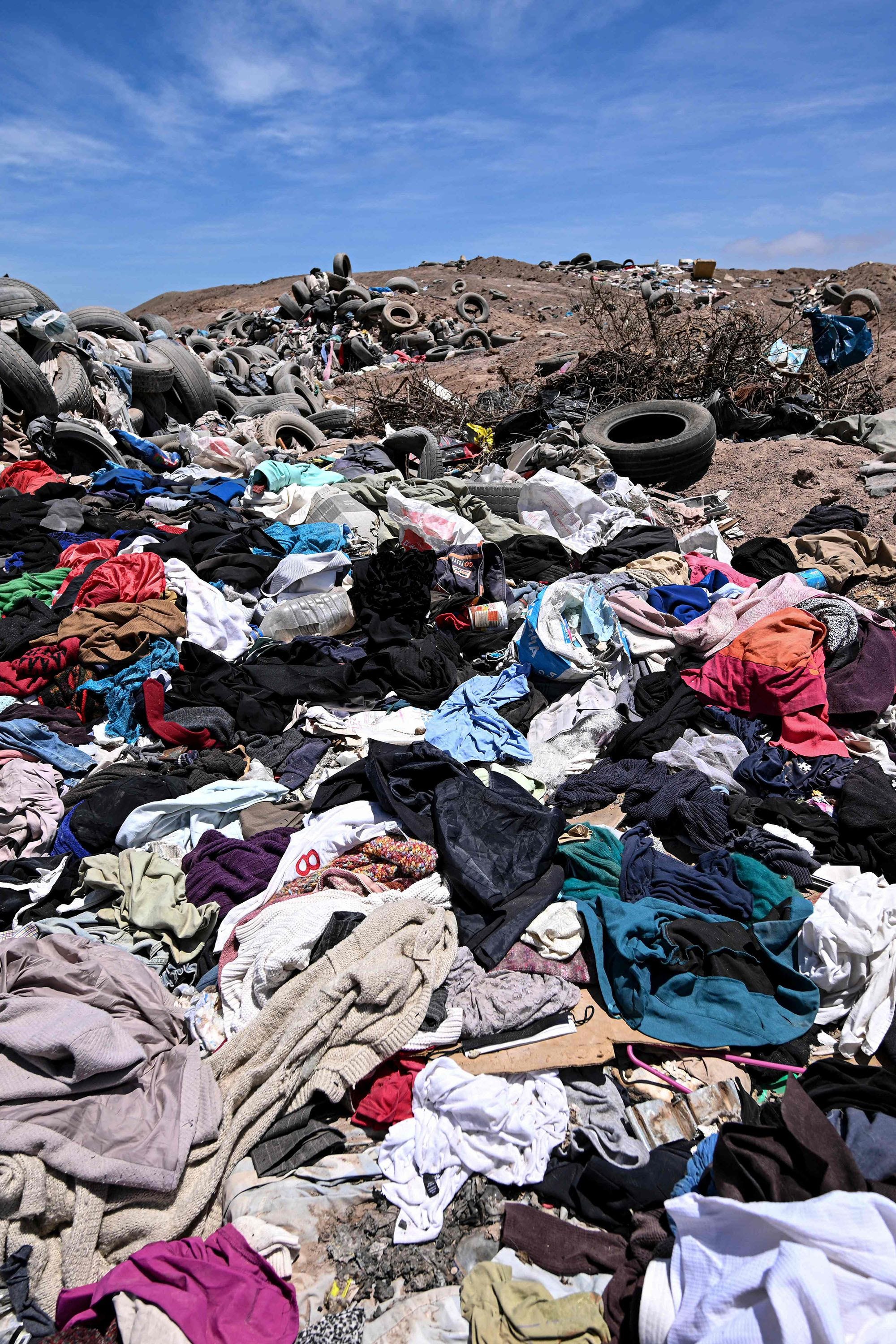
Economic “Growth”
The main way to determine if the economy is “healthy” is to look at the gross domestic product (GDP). You can look at nominal GDP or adjust for inflation to get real GDP. Since 2021, GDP has grown by about 3% per year, which is above the levels associated with stagnation (2%) and recession (0%). This metric is important for monetary, fiscal, and government policies. There’s a big problem, though: it’s flawed.
The BEA does a very detailed analysis of GDP and the breakdown within the economy. The problem isn’t the accounting or accuracy, but the meaning. Just because something was created in the economy doesn’t mean that society is better off for it. A portion of GDP, I’d argue, is actively harming people, not helping them. That’s extreme, but it’s not hard to find areas in the GDP report that, philosophically, do not need to exist.
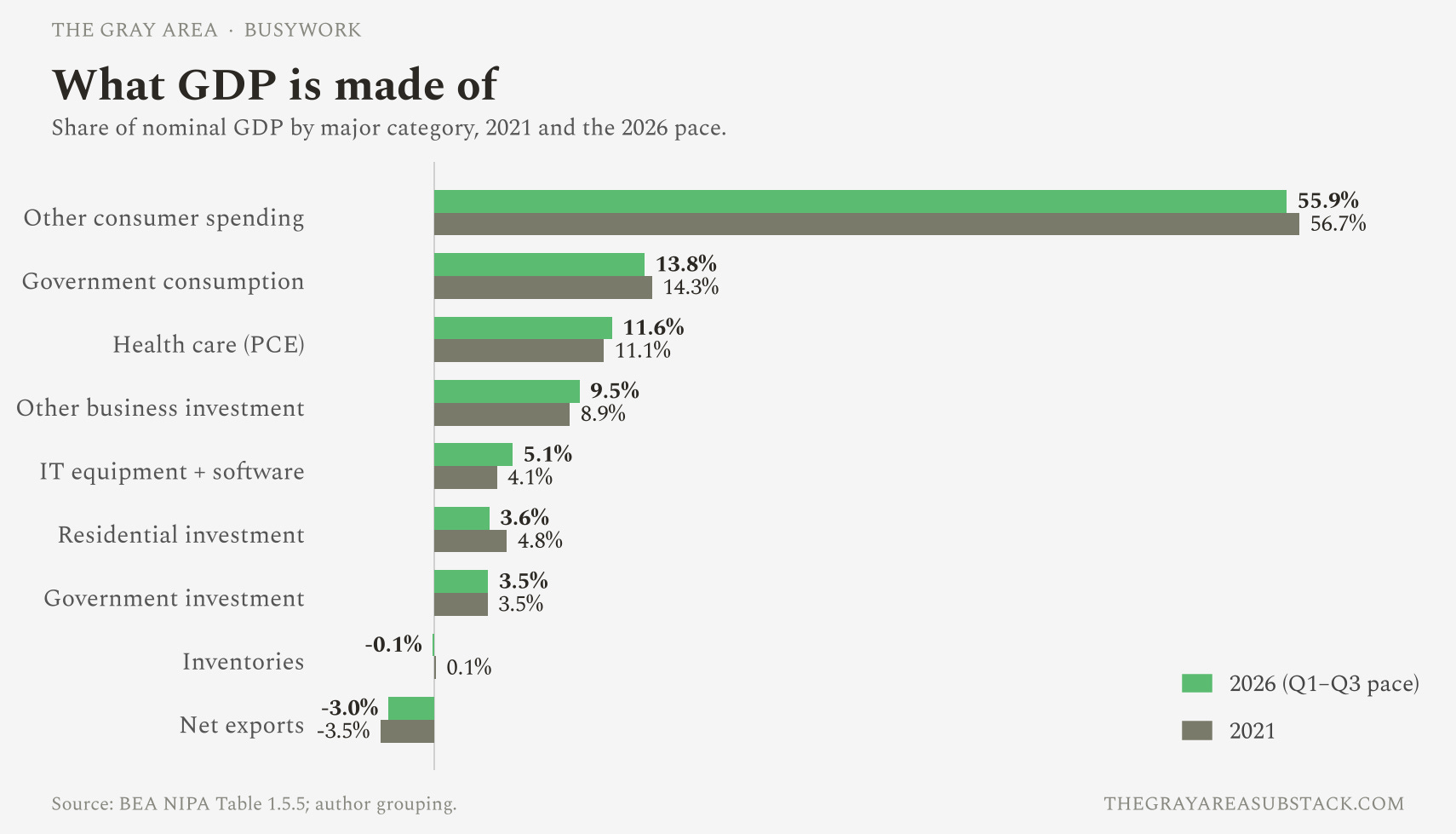
GDP accounted for $170 trillion in value created from 2021 to 2026. This is total GDP, not GDP growth. I have calculated what I believe to be “BS” or useless economic value. To be clear, I don’t think GDP is wrong, just that what it measures doesn’t have to be there. This is either economic activity that could easily vanish if conditions were different, does not have a purpose in improving lives, or is a misallocation of capital. Of the $170 trillion, I concluded that $60.7 trillion, or 35.6%, is essentially BS.
35.6% of GDP is a lot, over a third. I’ve gone through every line and column in the GDP release and thought about what to cut by my definition. This is a perspective piece, meaning I am opining on the state of the world, rather than making a distinct and data-driven economic argument. All views are opinions, and while all are based on research, I cannot fully flesh out every hot take and keep the article short.
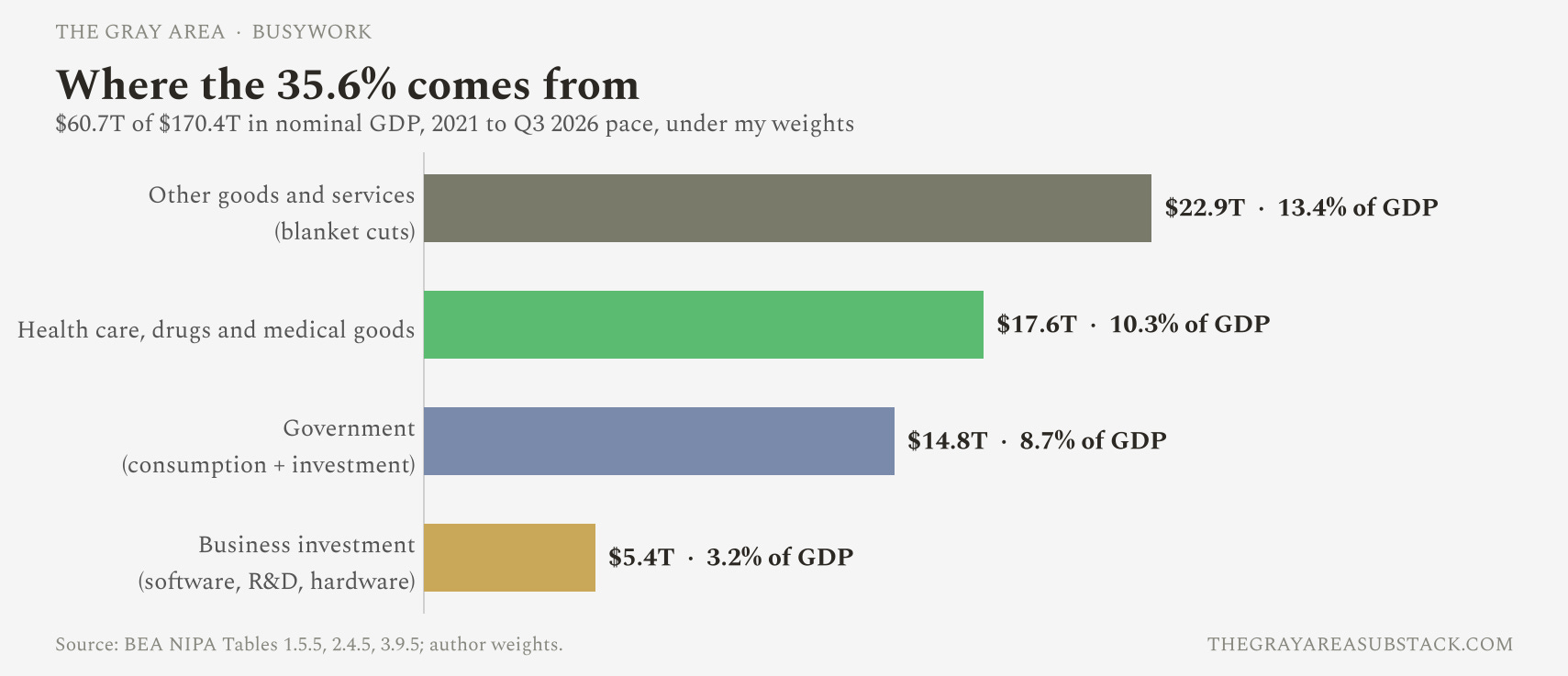
Consumer Spending
First, the US is extremely materialistic, doesn’t build things to last, and has systems for lawyers, auditing, and insurance that don’t need to exist. I cut a portion of goods and services that are not needed and don’t really add to society positively.
People don’t need a new car; they can get it fixed. How many new things do people buy when they do not need to? Society is built on cheap products and waste now. Transfer payments from the government aren’t their own line item in GDP, but show up in the spending habits of people. Last, excessive government regulation and deterioration of societal trust have meant an enormous system of law/audit/insurance has been built up, which is there arbitrarily.
Healthcare
I cut healthcare aggressively. The majority of the healthcare and pharmaceutical industry simply doesn’t need to exist if people were healthier. While it is a positive for society (you can certainly entertain arguments to the contrary), it is BS because it could easily not exist.
A CDC report suggests 90% of the nation’s health spending goes to people with chronic and mental health conditions, many of them tied to how we eat and live. Through excessive subsidies for healthcare, the government has created a monster whose incentive is to get and keep people sick. It is not hard to find examples of people who are extremely healthy and fit, people who have changed their lifestyle and defeated chronic illnesses, etc. To SOME extent, this is avoidable, especially on the margin for society as a whole.
Governemt
I lean towards the Austrian school of economics, which is aggressively free market. It may be unwise to cut the government to zero, as schools, roads, military, courts, police, fire departments, etc. should be funded. The hard-core Austrians likely argue that everything should be private, but that is not a realistic world for the US to live in, so I do not cut everything out. I cut about half, which is probably optimistic, considering the levels of fraud and waste within government spending.
The last person I want educating my future child is the government. This being a controversial statement is surprising, and the data is clear. As the US spends more on public education, outcomes get worse. I’ve written about this in Future Prospects. Additionally, the peer review system and government involvement in University funding have resulted in fewer scientific breakthroughs.
Defense and court spending are crucial, but waste is certainly abundant in national defense budgets. Tax collection and most government operations need not exist.
Much of government spending and investment is there because of a plethora of regulations and departments. Government bloat has risen exponentially over time. In a world without government involvement in economic affairs, its share of GDP would be tiny.
Business Investment and Equipment
Last, business investment is a positive to the economy, so you may be confused why I cut that. I cut spending on intellectual property and excess related to the AI buildout.
Intellectual property is a threat to private property rights and thwarts innovation and a better society. Patents and copyrights are state-granted monopolies, no different than the mega-farm lobbying for legislation so small farms cannot sell peer-to-peer.
The AI buildout is in a classic capital cycle bubble (1,2), meaning much of the investment is going to wind up wasted or unusable for years. The data clearly show a massive increase over the past two years related to AI, especially in hardware. This hardware could get written down by 90% if I turn out right about the AI bubble.
Conclusion
In addition to 35.6% of total GDP being BS, nearly 50% of real GDP growth over that time frame is BS. What are we doing as a society, wasting all of our resources on things we shouldn’t? Of course, I can’t say shouldn’t because people vote on what we should do with government, are as healthy as they choose, and spend money how they wish.
In a magical world where these went away, BS value probably wouldn’t disappear. It would be allocated differently, like other hobbies, different food/medicine types, different investment strategies, etc. Government and healthcare workers would have to find different jobs. Healthy people who keep a higher share of their income may go out to eat more, travel more, or buy more stuff.
The point I’m making is that we can’t look to GDP as a measure of our country's success. In many ways, we are getting worse, like health, education, and scientific discoveries. Minus my BS categories, the US economy would be stagnant. We are not actually “growing” our economy; we’re just recycling and wasting money.
I think it’s important to take stock of your own life and be prepared the best you can. Not only from a financial education perspective, which I hope to help with at The Gray Area, but also health, education, relationships, safety, and time/effort where it is most productive. Our society doesn’t do that anymore, but it doesn’t mean we can’t.
-Grayson
Like to see these asymmetric opportunities synthesized into a real model portfolio that beats the S&P 500 and avoids major downside risks?
Socials
Twitter/X - @graysonhoteling
Email - thegrayarea55@gmail.com
Archive - The Gray Area
Notes - The Gray Area
Promotions
Sign up for TradingView
For educational and entertainment purposes only. The Gray Area should not be taken as financial advice.
A lot to unpack there, while I'm a moderate left/centrist I have a strong libertarian streak as well and have high regard for pushing as much into free markets when applicable. Interestingly medical care is only partially or in some cases non-free market (do you choose when to get sick or injured, what hospital an ambulance takes you too?). Certainly your point about the free market aspect of staying healthy is well taken but people get sick or have underlying genetic disorders regardless (a massive Harvard study concluded that 75 percent of cancers were luck of the draw for instance). I have known people who were extremely fit and ate well and still died young.
That all said I'm in favor of Medicare for All. It could streamline government by getting rid of Medicaid, Obamacare, COBRA, and hundreds of other government subsidy programs at the federal and state levels. Private insurance and the need for businesses to provide benefits could be reduced or eliminated. Employees could change jobs without fear of losing benefits. The paperwork efficiency would be huge there. Workman's Comp and Auto insurance medical portions could also be put under the M4A umbrella. Volume pricing for 350 million people would be significant! Best of all doctors and hospitals stay in the free market, competing by providing better care. All M4A does is set prices and pay the bills. We have the most expensive healthcare in the world but not great outcomes comparitively so I think we can cut a lot of fat out of the system there. AI has lots of potential efficiencies to provide as well (protein topology, physiological modeling which could potentially streamline clinical trials for drug discovery). A lot more to talk about but an interesting aspect of AI is how it's handling a lot of paralegal work for lawyers. That's huge, especially if AI can do some of the legal departments of hospitals and such.